Raja Yoga: The Path of Experience, the Training of the Mind, and the Quiet Power of Practice
Raja Yoga prioritizes direct experience: train restless mind through disciplined practice, remembering, and holy company.
Om Asato Maa Sadgamaya — lead us from the unreal to the real.
Tamaso Maa Jyotir Gamaya — lead us from darkness to light.
Mrityor Maa Amritam Gamaya — lead us from death to immortality.
Om Shanti Shanti Shanti.
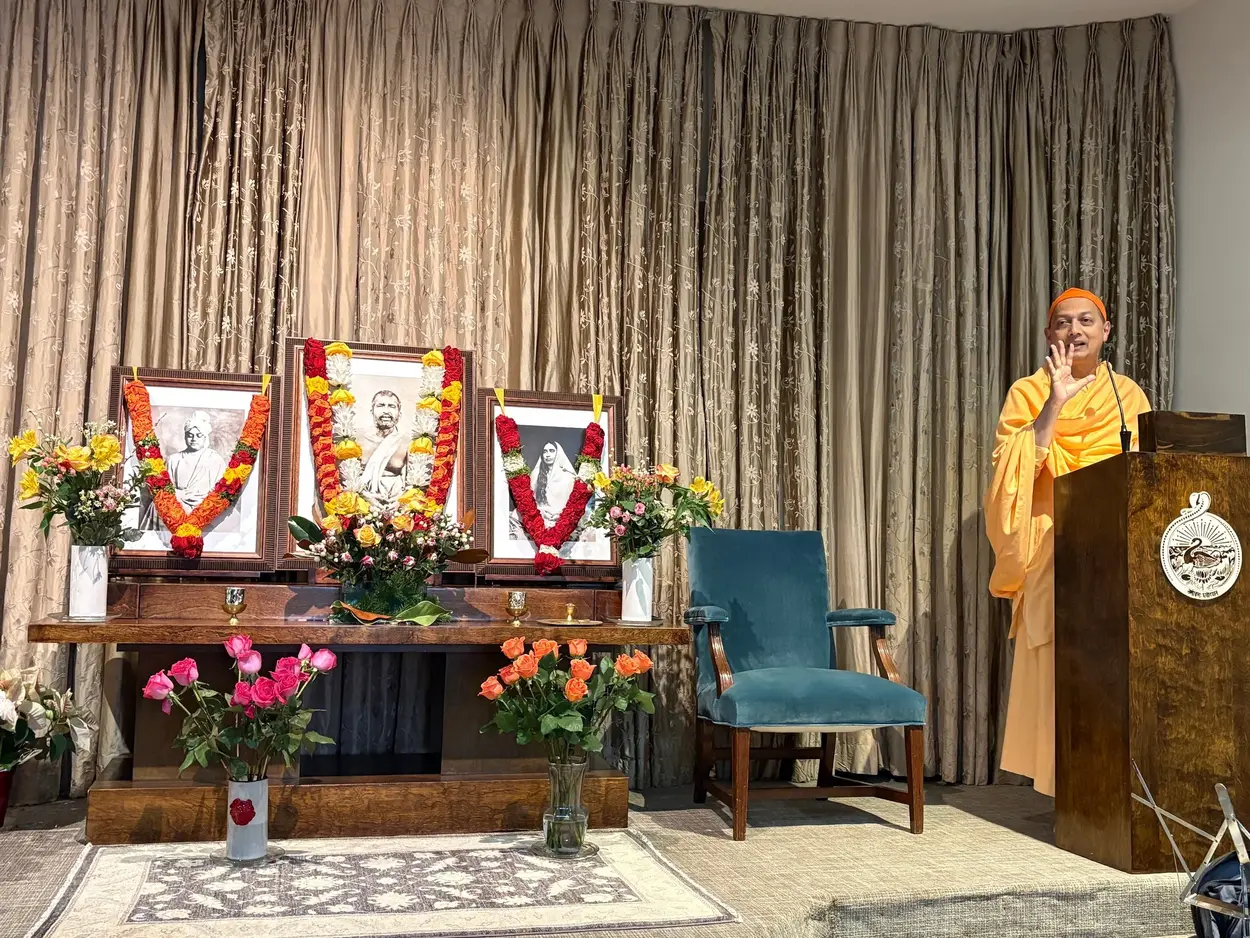
These ancient invocations are more than ceremonial openings. They capture a human longing that keeps returning, generation after generation: the desire to move from confusion to clarity, from agitation to peace, and from a sense of limitation to something vast and free. In the Indian spiritual landscape, one of the most direct responses to this longing is Raja Yoga—often described as the path of meditation.
Raja Yoga does not begin by demanding belief. It begins with a practical and even daring proposition: what matters most is experience. Not mere agreement with an idea, not loyalty to doctrine, not an inherited label—but a lived discovery. This is why Raja Yoga has been called the “royal” path: it aims straight at the mind, because the mind is where bondage is felt and where freedom must be realized.
This essay explores Raja Yoga in three movements:
- Why Raja Yoga insists on experience rather than belief
- How meditation becomes effective through simple disciplines
- How mythic stories and vivid analogies explain a deep psychology of practice
Throughout, the goal is not to argue philosophy as an abstraction, but to illuminate what it means to train the mind so reality can be known directly.
1) The Raja Yogi’s Claim: Religion Must Be Experienced
Raja Yoga’s most striking claim can be summarized in a sentence Swami Vivekananda made famous: religion is realization. In other words, religion is not primarily about signing onto a list of propositions. It is about seeing—directly, unmistakably—something true about yourself and existence.
This emphasis on realization is not presented as a modern innovation. In the Indian context, it is treated as something assumed for centuries: the presence of saints and mystics across traditions who speak not like theorists but like witnesses. The language of mysticism appears everywhere—within Hindu traditions and beyond them—because at the core of religion, you find those who claim: “I did not merely believe; I saw.”
That is why the lives of figures like Sri Ramakrishna and Swami Vivekananda are repeatedly invoked as examples of the experience-first approach. Sri Ramakrishna’s early spiritual life is framed as a burning question directed toward the Divine Mother: Are you real? Is there something living behind this form? Can I experience you? The intensity was not academic. It was existential.
Vivekananda’s own early quest is remembered in a similarly direct style. He walked among the renowned intellectuals and teachers of his time asking a question that cuts through social convention: “Have you seen God?” Not, “Do you believe?” Not, “What is your philosophy?” But, “Have you seen?”
When he finally met Sri Ramakrishna and heard the answer—“Yes, and you can too”—it satisfied him not as rhetoric but as a promise of verifiable experience. A crucial distinction appears here: a teacher who says “I have seen, and you cannot” becomes a gatekeeper demanding blind loyalty; a teacher who says “I have seen, and you can too” becomes a guide pointing to a shared human possibility.
Raja Yoga stands firmly with the second kind of teacher. Its posture is: if something is real, it should be knowable—not just by tradition, but by direct inner evidence.
2) Two Paradigms: Bhakti’s Faith and Raja Yoga’s Focus
Different yogic paths often begin with different diagnoses.
- In Bhakti Yoga (the devotional path), the problem is described as lack of faith, lack of surrender, lack of love toward God. The remedy is devotion—reorienting the heart.
- In Raja Yoga (the meditative path), the problem is described as restlessness of mind. The remedy is concentration, stillness, and the disciplined training of attention.
Raja Yoga says: we do not see truth because our minds are scattered. Thoughts pull us in many directions, emotions surge, memory replays old scenes, imagination anticipates futures, and the sense of self becomes tangled with every movement. In such a condition, even if the truth is present—like a clear lake bottom under rippling water—we cannot see it.
So Raja Yoga proposes: calm the surface. Focus the mind. And then, rather than debating truths, you will know.
This is one of the most practical aspects of Raja Yoga: it treats meditation as a kind of psychophysical technology—a set of exercises that reliably change the mind when practiced consistently. It is not a marketplace of opinions. It is closer to training.
Yet Raja Yoga also acknowledges something humbling: there are countless meditation methods in the world. From Buddhist vipassana and modern mindfulness, to Jain techniques, to Tantric and Kashmiri Shaivism’s refined practices, to visualization traditions, mantra repetition, Sufi disciplines, and Christian contemplative prayer like the “prayer of the heart.” The world is full of methods, and modern life is full of access—almost like a supermarket of techniques.
But access is not attainment. The real question is: why does meditation remain so difficult even when methods are abundant?
3) Training Beats Information: The Mind as a Body
A key insight presented in the talk is quietly revolutionary for modern seekers: the mind is a kind of body, often called the subtle body (sukshma sharira). And like any body, it is shaped not by information but by training.
This is where the conversation becomes sharply practical. One may read every book about meditation, absorb every commentary on Patanjali, and still remain unchanged if actual sitting practice is absent. Meanwhile, someone who sits for even a few minutes daily—imperfectly, mechanically—has begun to transform the mind through repetition.
This principle is explained through a striking analogy drawn from psychology: the elephant and the rider.
- The rider represents intellect—the part of us that understands, plans, and makes resolutions.
- The elephant represents the deeper forces—habit, emotion, bodily comfort, instinctive preference, inertia.
The rider can read maps and make decisions. But the rider is not strong enough to drag the elephant anywhere against its will. This explains a familiar pattern: a person attends a retreat, feels inspired, decides to meditate at dawn—and then the alarm rings and the body refuses. The intellect “signed up,” but the elephant did not.
So what does the elephant respond to? Not lectures. Not ideals. Not one-time inspiration. The elephant responds to training—steady repetition over time until the new behavior becomes natural.
This is why Raja Yoga places such weight on regularity. Not because spiritual life is mechanical, but because the mind’s deep patterns are reshaped through consistent practice.
4) “Before You Sit”: Ten Supports That Make Meditation Work
Meditation is often marketed as easy: just close your eyes, breathe, relax. Many discover quickly that this is not the full story. A more honest view recognizes that meditation becomes effective when certain conditions support it.
A set of ten practical points is attributed to Swami Ashokananda, offered as guidance before one dives into technical details of the Yoga Sutras. The central idea is simple: if you do these things, meditation becomes joyful and effective; if you ignore them, meditation often becomes a struggle.
Here are the major themes embedded in those points.
1) Be Regular
Meditate daily. Don’t wait for a perfect mood. Waiting for inspiration is a subtle form of postponement. Regularity trains the mind the way exercise trains the body.
2) Fix a Time
As much as possible, meditate at the same times each day—often morning and evening. This is less about rigid scheduling and more about conditioning the mind: the mind learns, “this is the hour of turning inward.”
Tradition also highlights certain “junction times” (sandhi)—dawn, noon, dusk, midnight—when nature seems quieter and the body-mind may naturally incline inward. Whether one lives in a quiet town or a modern city, the underlying point remains: choose times that support steadiness.
3) Fix a Place
A consistent place—a corner, a chair, a simple space—becomes a psychological anchor. The moment you sit there, the mind remembers what it is for. This is why sacred places feel different: decades or centuries of prayer and contemplation leave a subtle imprint on human perception. Even a first-time visitor can feel it.
4) Train Gently, Not Violently
It’s tempting to imitate heroic schedules overnight. But extreme discipline without preparation often collapses into rebound. A better rule is: make your comfort a little less comfortable—just enough to create training, not enough to create burnout.
5) Watch Negative Thoughts Without Panic
When meditation begins, many people feel more disturbed, not less. The talk offers a crucial correction: those thoughts were already there; you were simply too distracted to notice.
An image makes this vivid: washing an old inkpot. At first, the water runs dark—because the old ink dissolves. Only later does the water become clear. Likewise, as the mind settles, buried patterns surface. The instruction is not to fight them with drama, but to observe them and let them pass.
A Zen-style practice illustrates the same: place a “black stone” for disturbing thoughts and a “white stone” for uplifting thoughts. Over time, with practice, the bowl shifts toward white—not by force, but by clarity and persistence.
There is also an important caution: for minds that are severely unstable, meditation can be risky because it can intensify inner material. In such cases, grounding through service, routine, and healthy activity may be more supportive at first.
6) Choose Company Carefully
Company shapes consciousness. Not because other people are “bad,” but because the mind absorbs atmosphere. Live near soot, and some blackness will cling. Holy company draws out the best tendencies; worldly company can awaken old habits.
A humorous twist appears: someone asks for holy company, and the reply is, “But do the holy want your company?” Beneath the humor lies a truth: companionship confirms who you are becoming.
7) Practice Intelligent Asceticism (Tapasya)
Asceticism here is not self-hatred. It is disciplined simplification: modest restraint in sleep, comfort, entertainment, food, and indulgence—so the mind gains strength. The goal is concentration, not punishment.
A story captures the danger of excess: a monk decides to give up milk to gain more meditation time—but then he spends meditation thinking about milk. The lesson is practical: deprivation that fuels obsession defeats the purpose. Use common sense.
8) Enter Meditation by Dropping Roles
Before sitting, consciously lay down identity: not “executive,” not “parent,” not “student,” not “worried planner.” The talk uses a powerful image: leaving shoes outside a temple. In the same way, leave your roles outside the inner temple of meditation.
A blunt reminder drives this home: from the perspective of eternity, many anxieties shrink. In sleep, all responsibilities vanish; there is no guarantee of waking. So when you sit, sit with the seriousness of what is real.
9) Cultivate Yearning
Techniques matter, but longing matters more. Saints are described as having hunger for God—an intensity that organizes everything around realization. If you do not feel it strongly, you can begin by invoking it, imagining it, remembering what matters most.
A simple saying expresses the psychology: the truly thirsty will even drink from a puddle after clearing the scum. The not-thirsty demand premium water. Spiritual life accelerates when yearning becomes real.
10) Carry a “Bhava” Through the Day
Meditation is not meant to be a sudden jump from chaos into silence and back into chaos again. A subtle continuity through the day—mantra in the background, prayer in the heart, brief moments of recollection—makes sitting easier. Like a tanpura drone beneath music, an underlying remembrance stabilizes the mind.
5) The Yoga Sutras: A Classic Manual, a Shared Heritage
After these practical supports, the talk points toward the deeper study of Patanjali’s Yoga Sutras, often presented as one of the most influential handbooks of meditation ever composed.
There is also an intriguing cultural note: many of Vivekananda’s early works—on Raja Yoga, Karma Yoga, Jnana Yoga, Bhakti Yoga—were published in places like New York and London, weaving the spiritual heritage of India into a global conversation. Raja Yoga, as a text and as an approach, became part of a worldwide vocabulary.
The talk also acknowledges scholarly debate about dating: whether the Yoga Sutras in their current form are pre- or post-Buddhist. But it argues something important regardless of chronology: the meditation techniques are very ancient. Even early records of the Buddha’s training reflect yogic influence and a culture already rich in contemplative disciplines.
So Raja Yoga is not presented as isolated. It is part of a long continuum of practices, shared and reshaped across Indian traditions, and echoed across the world.
6) Myth as Psychology: Hiranyagarbha and Patanjali
Why tell stories about gods, lotuses, cosmic serpents, and a student who accidentally destroys a classroom?
Because myths often function as symbolic psychology. They compress abstract truths into memorable images.
One story explains yoga as the discovery of inner vision. Hiranyagarbha—linked with Brahma as cosmic mind—appears at the dawn of creation, confused: “Where am I?” He closes his eyes, meditates, and realization dawns: he sees the source (Vishnu) and the structure of reality unfolds. Meditation becomes the primal act of clarity.
Another story identifies Patanjali with the cosmic serpent Shesha and assigns him three gifts for humanity: medicine for the mind (Yoga), medicine for speech (grammar), and medicine for the body (Ayurveda). It’s a symbolic way of saying: human life needs refinement in thought, expression, and health.
Then comes a dramatic narrative: Patanjali teaches behind a curtain, students wonder why, one peeks, sees terrifying cosmic reality, faints, a spark escapes, and the students are burned to ashes. Patanjali laments—not the loss of students, but the loss of grammar. It is comedic, cosmic, and oddly instructive: knowledge is precious, and spiritual forces are not toys for casual curiosity.
Even the “goat-eaten commentary” story has a practical wink: without backup, knowledge can vanish. It is ancient humor with a modern lesson.
7) What Raja Yoga Ultimately Offers
If Raja Yoga can be summarized in a single sentence, it might be this:
Train the mind until it becomes clear and steady enough to reveal what is already present.
This path does not deny devotion, nor does it dismiss wisdom. It simply insists that realization must move from concept to direct knowing. It respects the mind’s power—and respects the mind’s stubbornness. It does not assume that understanding automatically becomes transformation. It asks for practice.
And it holds a hopeful premise: the mind can change. It can become like the winter river—slower, clearer, safer to cross. It can become like a compass needle that returns naturally to its true direction after being disturbed. It can become a lake without ripples, where depth is visible.
In that clarity, something shifts. Meditation stops being a war with thoughts and becomes a settling into presence. Spiritual life stops being an occasional hobby and becomes a steady undercurrent. And religion stops being a borrowed story and becomes a lived fact.
Raja Yoga is demanding in one way and generous in another. It demands consistency. But it offers a freedom that does not depend on anyone else’s belief, approval, or permission—because it rests on what you can discover in your own consciousness.
Om Shanti Shanti Shanti.
Hari Om Tat Sat.
You will get Vedanta updates in your inbox.
Occasional reflections on Vedanta. Unsubscribe anytime.