What Swami Sarvapriyananda Taught Across Core Vedanta Themes
Fifty concise answers explore Self, Brahman, Maya, practice, ethics, devotion, freedom, daily living, compassion.
Swami Sarvapriyananda generally presents Vedanta as a practical way to discover what you truly are, beyond thoughts, roles, and constant change. His talks often move from everyday experience to deep insight, showing how awareness remains steady through waking, dreaming, and deep sleep. With clarity and warmth, he connects classical teachings to modern life, making meditation, devotion, and self-inquiry feel grounded. The aim is not escape, but freedom that expresses itself as calm, courage, and kindness in the middle of demands.
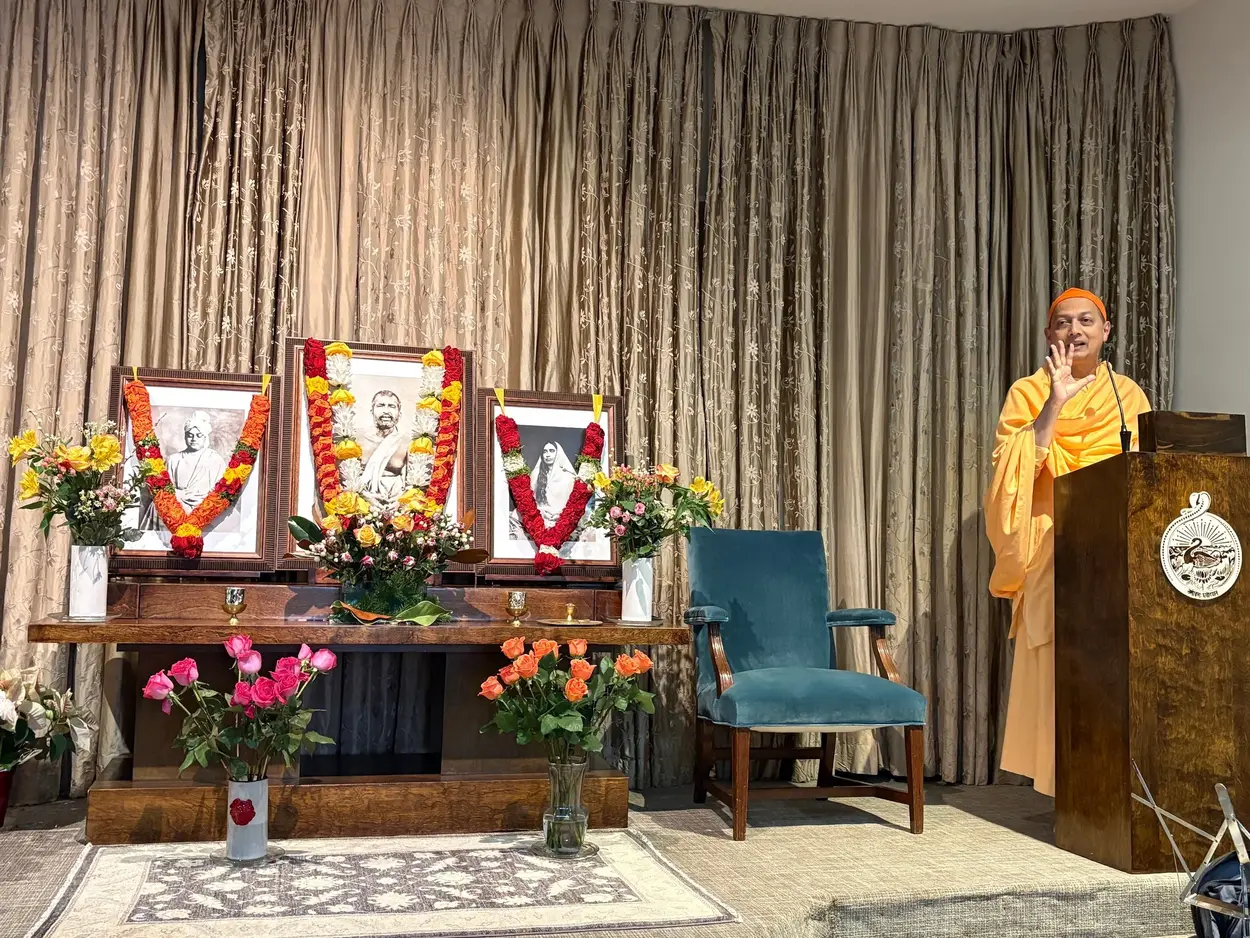
These reflections gather key themes he frequently returns to: the Self as awareness, the play of Maya, the disciplines of karma, devotion, and knowledge, and the quiet strength of ethical living. Each answer is brief, meant to spark recognition and encourage practice rather than debate. Read slowly, pause when something clicks, and try a simple experiment: notice the witness of your experience right now. Over time, understanding ripens into steadiness, compassion, and a lighter heart. Let them guide your steps.
-
What did Swami Sarvapriyananda say about the nature of the Self? He generally explains that the Self is awareness itself, not a changing body, mind, or story. Thoughts and emotions appear within consciousness, but do not define it. By steady inquiry and meditation, you notice the witness that remains constant through waking, dream, and deep sleep. Recognition brings freedom and peace.
-
What did Swami Sarvapriyananda say about Brahman in Advaita Vedanta? He usually describes Brahman as the ultimate reality, pure existence-consciousness-bliss, beyond objects, concepts, and change. The world is experienced, yet its deepest basis is nondual. Brahman is not a thing to grasp; it is what makes knowing possible. Practice reveals it as your own awareness. This is Vedanta’s central claim.
-
What did Swami Sarvapriyananda say about Maya and appearance? He generally uses Maya to explain why a nondual reality appears as many. It is not mere nothingness, but a power of projection and concealment. Like mistaking a rope for a snake, ignorance overlays names and forms. Knowledge does not destroy experience, it removes confusion and fear. In daily life.
-
What did Swami Sarvapriyananda say about meditation in Vedanta? He usually presents meditation as training attention and quieting the mind so the teachings become clear. Meditation is not forcing blankness; it is learning to rest as the witness. Practices like breath awareness, mantra, and loving-kindness support inquiry. Over time, calmness and clarity mature into insight. And steadiness in action.
-
What did Swami Sarvapriyananda say about Karma Yoga? He generally defines Karma Yoga as doing your duties with skill and dedication while offering results to the divine. It reduces ego, purifies the mind, and prepares you for deeper knowledge. Success and failure become teachers rather than wounds. This attitude turns ordinary work into spiritual practice. For everyone, everywhere.
-
What did Swami Sarvapriyananda say about Bhakti and devotion? He often emphasizes that devotion is not opposed to nonduality. Bhakti softens the heart, channels emotions, and steadies the mind through love of God, guru, or ideal. In mature devotion, the sense of separation thins, and worship becomes communion. Love and knowledge converge in liberation. In the highest Vedantic view.
-
What did Swami Sarvapriyananda say about Jnana Yoga? He generally describes Jnana Yoga as a disciplined path of hearing, reflecting, and meditating on nondual teachings. It uses reason, scripture, and direct contemplation to remove ignorance about the Self. The goal is not new experiences, but clear recognition of what is always present: awareness itself, free and complete. Now.
-
What did Swami Sarvapriyananda say about the witness consciousness? He often points to the witness as the constant knower of changing thoughts, sensations, and perceptions. The witness is not another object to observe; it is the observing itself. When you identify with the witness, suffering loosens because events are seen as appearances in awareness, not as your identity. Alone.
-
What did Swami Sarvapriyananda say about deep sleep and consciousness? He typically uses deep sleep to show that awareness is not limited to waking thoughts. In sleep you report, later, that you slept happily and knew nothing. That memory implies a continuing subject. The mind rests, yet the Self remains, like a light unseen when no objects are present. There.
-
What did Swami Sarvapriyananda say about suffering and detachment? He generally distinguishes healthy detachment from indifference. Detachment means you engage fully, yet do not cling to outcomes or identities. Suffering grows when we demand permanence from what changes. By seeing experiences as passing, and by rooting yourself in awareness, compassion stays strong while anxiety weakens. And joy becomes simpler.
-
What did Swami Sarvapriyananda say about mindfulness and Vedanta? He often relates mindfulness to Vedantic practice as attention without entanglement. Mindfulness helps you notice thoughts, emotions, and reactions as events, creating space for wisdom. Vedanta then asks, Who is aware of all this? Mindfulness steadies observation; inquiry clarifies the observer as nondual awareness. Both together support a liberated life.
-
What did Swami Sarvapriyananda say about God in nondual philosophy? He generally explains two complementary views: Saguna Ishvara, God with attributes for devotion and guidance, and Nirguna Brahman, pure reality beyond attributes. Worship begins with relationship and matures into identity. God is not denied; rather, the highest teaching says the divine presence is the very consciousness by which you know.
-
What did Swami Sarvapriyananda say about prayer and its purpose? He often says prayer is less about changing God and more about changing the pray-er. Honest prayer refines intention, opens gratitude, and loosens ego. It can ask for strength, clarity, and compassion rather than control. When repeated, prayer becomes remembrance of the divine, steadying you through uncertainty and loss. Daily.
-
What did Swami Sarvapriyananda say about free will and fate? He usually presents a nuanced view: within the world of causes, choices matter and shape character. Yet the deepest Self is untouched by action. Karma conditions tendencies, but spiritual practice increases freedom by widening awareness. As identity shifts from ego to witness, life feels less fated and more intelligently lived.
-
What did Swami Sarvapriyananda say about ethics in Advaita? He generally rejects the idea that nonduality makes ethics irrelevant. If all beings share one reality, harming another is harming yourself. Moral disciplines, like truthfulness and nonviolence, purify the mind and reduce agitation. Ethics is practical preparation, not mere social rule. Realization naturally expresses itself as compassion. In speech, thought.
-
What did Swami Sarvapriyananda say about the Upanishads? He often calls the Upanishads the philosophical heart of Vedanta. They are not dogma, but pointers to direct insight through rigorous questioning. Their method uses analysis of experience, teacher-student dialogue, and contemplative instruction. Studied with guidance, they help translate mystical intuition into stable understanding and a transformative worldview. For seekers.
-
What did Swami Sarvapriyananda say about the practice ‘neti neti’? He generally explains ‘neti neti’ as a method of negation: you are not the body, not sensations, not thoughts, not roles. By discarding what is observed, you arrive at the observer. The practice is not nihilism; it reveals awareness that remains when all objects are set aside. In clear silence.
-
What did Swami Sarvapriyananda say about whether the world is unreal? He usually clarifies that ‘unreal’ in Advaita means dependent and changing, not nonexistent. The world is experienced and useful, yet it does not have absolute, independent reality. Like waves on water, forms appear and vanish while the underlying reality remains. This view reduces attachment without denying responsibility. In daily conduct.
-
What did Swami Sarvapriyananda say about enlightenment and mystical experiences? He often cautions that powerful experiences are not the same as realization. Visions, bliss, and altered states come and go. Enlightenment, as Vedanta presents it, is stable knowledge: knowing what you truly are. Experiences may inspire practice, but understanding removes ignorance. The test is lasting freedom amid ordinary life. Itself.
-
What did Swami Sarvapriyananda say about science and consciousness? He generally appreciates science for explaining objective phenomena, while noting its methods study what can be measured. Consciousness is the condition for measurement, yet not reduced to quantities. Vedanta offers a complementary inquiry: first-person investigation into awareness. When both are respected, science and spirituality can cooperate without confusion or hostility.
-
What did Swami Sarvapriyananda say about Sri Ramakrishna’s message? He often presents Sri Ramakrishna as embodying the harmony of paths: devotion, meditation, and nondual insight. Ramakrishna’s life shows that sincere spiritual striving can culminate in direct realization, and that different traditions can lead seekers toward the same truth. The emphasis is practical transformation, love, and inner freedom. For all.
-
What did Swami Sarvapriyananda say about Swami Vivekananda’s core teaching? He generally highlights Vivekananda’s call to see the divine in every being and to manifest the divinity already within. Vivekananda combines Vedantic nonduality with service and strength. Spiritual life is not escape; it is fearless engagement grounded in the Self. Faith, reason, and compassion are trained together. Through disciplined practice.
-
What did Swami Sarvapriyananda say about service as spirituality? He often says service becomes spiritual when it is offered without ego and without expecting praise. Serving others is worship of the same reality appearing as many. It trains humility, patience, and empathy, and it counters self-centered habits. In that sense, service is both moral duty and a powerful meditation.
-
What did Swami Sarvapriyananda say about fear of death? He generally teaches that fear of death comes from mistaking yourself for the body. The body changes and ends, but awareness is not an object in time. Contemplating the witness reduces dread. Vedanta does not deny grief; it offers a deeper identity that can hold grief wisely. Even when tears.
-
What did Swami Sarvapriyananda say about reincarnation and karma? He often frames reincarnation as a working hypothesis within Hindu traditions, linked to karma and the continuity of tendencies. Whether one accepts it literally or not, the ethical lesson is clear: actions shape character and future experience. Vedanta finally points beyond all birth and death to the timeless Self. Alone.
-
What did Swami Sarvapriyananda say about Patanjali Yoga and Vedanta? He generally respects Patanjali’s Yoga as a powerful psychology of attention and stillness. Yoga disciplines the mind through ethics, posture, breath, and concentration. Vedanta then uses that refined mind to understand nonduality. The paths are complementary: Yoga stabilizes experience; Vedanta clarifies the experiencer. Together they support liberation. With less struggle.
-
What did Swami Sarvapriyananda say about controlling the mind? He often notes that forcing the mind creates more tension. Instead, train attention gently, like guiding a puppy. Use meditation, prayer, and ethical living to reduce restlessness. Most important, see the mind as an object in awareness. As identity shifts to the witness, the mind settles and becomes a tool.
-
What did Swami Sarvapriyananda say about the ego? He generally explains the ego as a sense of individuality built from memories, roles, and desires. It helps navigate life, but it is not the identity. Suffering grows when the ego is defended as absolute. By seeing ego as a pattern, you regain space, humility, and freedom to respond wisely.
-
What did Swami Sarvapriyananda say about gratitude as a practice? He often suggests gratitude as a simple way to shift attention from lack to abundance. Gratitude dissolves resentment, softens the heart, and supports devotion. In Vedantic terms, it recognizes the given-ness of existence and the support of countless causes. Practiced daily, gratitude becomes a quiet form of worship and contentment.
-
What did Swami Sarvapriyananda say about mantra and chanting? He generally explains mantra as sound infused with meaning and devotion, used to gather a scattered mind. Repetition creates a stable rhythm, reduces mental noise, and awakens sacred association. Chanting can be loud, whispered, or mental. Over time, mantra becomes a remembrance, making the mind fit for meditation and inquiry.
-
What did Swami Sarvapriyananda say about the role of a guru? He often says a guru is not a personality cult, but a guide who points you back to your own awareness. The teacher offers method, clarity, and encouragement, and helps correct blind spots. Respect is useful; dependency is not. Ultimately, the guru’s purpose is to awaken inner confidence and insight.
-
What did Swami Sarvapriyananda say about scripture versus reason? He generally encourages using reason to test and understand scripture, not to accept blindly. Scripture provides a map; reason checks coherence; meditation verifies in experience. When conflict appears, he advises interpretation and humility about assumptions. Vedanta aims for knowledge, not belief, so questioning is welcomed and required for maturity. Always.
-
What did Swami Sarvapriyananda say about happiness and bliss? He often distinguishes pleasure from the contentment Vedanta calls bliss. Pleasure depends on objects and conditions. Bliss is the nature of the Self, uncovered when craving quiets and identification loosens. The mind reflects that fullness, like a clean mirror reflects light. Practice removes obstacles so joy shines without constant acquisition.
-
What did Swami Sarvapriyananda say about anxiety and the restless mind? He generally suggests that anxiety is amplified by identification with thoughts of the future. The body reacts, then the mind narrates danger. Return to the present with breath, prayer, or mantra, and remember the witness. From that center, you can act skillfully without being dominated by worry. Again and again.
-
What did Swami Sarvapriyananda say about compassion in nonduality? He often explains that nonduality deepens compassion because others are not separate. Compassion is not pity; it is recognition of shared being. When ego boundaries soften, kindness becomes spontaneous and less calculated. Serving, listening, and forgiving become natural expressions of seeing the Self in all. This is Advaita, not abstraction.
-
What did Swami Sarvapriyananda say about concentration and study? He generally recommends balancing intellectual study with steady practice. Study gives concepts and inspiration, but concentration is built through repetition and routine. Short daily sessions, fewer distractions, and intention matter more than occasional long efforts. When attention strengthens, reading becomes contemplation, and contemplation becomes living understanding in relationships and work.
-
What did Swami Sarvapriyananda say about silence and retreat? He often values silence as a condition, not a guarantee. Silence reduces sensory input and roles, allowing deeper observation. Retreats can accelerate practice when paired with guidance and discipline. Yet the goal is to carry silence into busy life. Real freedom shows when peace remains amid noise, conflict, and responsibility.
-
What did Swami Sarvapriyananda say about living enlightened in daily life? He generally describes it as ordinary life lived with clarity. You still work, love, and face problems, but you are less possessed by them. Actions continue, yet the claim of ‘me’ and ‘mine’ weakens. You respond rather than react. Joy, patience, and compassion become stable because they rest on awareness.
-
What did Swami Sarvapriyananda say about desire and renunciation? He often says renunciation is not hating the world; it is seeing desire’s limits. Desires promise completion, but satisfaction fades and wants arise. With discrimination, you keep what supports growth and drop what entangles. Renunciation can be internal while active. The result is lightness, focus, and a taste of freedom.
-
What did Swami Sarvapriyananda say about relationships and nonattachment? He often advises loving people without turning them into possessions. Nonattachment does not mean coldness; it means letting others be free and accepting change. In relationships, cultivate presence, honesty, and service. When you see awareness in all, communication softens and conflicts turn into opportunities for understanding, not battles for ego.
-
What did Swami Sarvapriyananda say about anger and emotional mastery? He generally treats anger as energy mixed with hurt and expectation. The first step is awareness: notice heat in the body and stories in the mind. Pause, breathe, and avoid speech. Then examine the belief behind the reaction. With practice, anger becomes information, not a command, and compassion becomes possible.
-
What did Swami Sarvapriyananda say about roles and identity? He often says roles are masks, but not your face. You can be a parent, student, or seeker, yet none of these exhaust what you are. Problems arise when a role becomes self-worth. Vedanta invites you to act in roles while remembering the witness. Then outcomes do not define you.
-
What did Swami Sarvapriyananda say about love in the nondual vision? He often says love points beyond ego because in love the boundary softens and the other matters. Devotion, friendship, and compassion can be windows into nonseparation. In Advaita, the highest love is recognizing one reality in all forms. Then love is not merely emotion; it is understanding expressed warmly. Everywhere.
-
What did Swami Sarvapriyananda say about spiritual dryness and doubt? He generally normalizes dry phases and doubt as part of growth. Feelings fluctuate, but discipline can continue. Return to basics: regular practice, ethical living, study, and service. Ask good questions and seek guidance. Doubt becomes constructive when it pushes you toward clarity rather than cynicism. Perseverance precedes breakthroughs in understanding.
-
What did Swami Sarvapriyananda say about jivanmukti, liberation while living? He generally explains jivanmukti as freedom from bondage of ignorance, even while the body and mind continue. The liberated person still experiences sensations and situations, but no longer feels limited by them. Knowledge remains firm: I am awareness, not the changing stream. Life is lived with ease, compassion, and equanimity.
-
What did Swami Sarvapriyananda say about breath meditation versus self-inquiry? He suggests they serve different purposes. Breath meditation calms and concentrates the mind, making it less reactive. Self-inquiry uses that stability to ask, Who am I? and recognize the witness. If inquiry feels hard, begin with breath or mantra. If calm feels dull, add inquiry for clarity and depth. Gently.
-
What did Swami Sarvapriyananda say about the meaning of ‘I’? He often notes that ‘I’ is used in two ways: the ego-sense, linked to body and biography, and the deeper sense of awareness. In inquiry, you trace the feeling of ‘I’ back to its source. When the story is seen as a thought, the ‘I am’ remains, peaceful and self-evident.
-
What did Swami Sarvapriyananda say about posture, food, and lifestyle for practice? He generally keeps it practical: sit in a stable, comfortable posture so the body stops distracting the mind. Favor moderation in food, sleep, and stimulation. Choose habits that support clarity rather than agitation. The goal is not austerity, but a mind that is calm and available for inquiry and devotion.
-
What did Swami Sarvapriyananda say about ‘Am I doing meditation right’? He often reassures that progress is measured less by states and more by small shifts: calmer reactions, clearer attention, kinder behavior, and interest. Distraction is normal; returning is the practice. Keep the method simple and regular, and avoid self-judgment. With time, the mind learns the rhythm and becomes more transparent.
-
What did Swami Sarvapriyananda say about the ultimate goal of spiritual life? He frames the goal as freedom, not superstition or escape. Freedom means knowing your nature as awareness and living from that knowledge. It includes peace of mind, love of all, and fearlessness in the face of change. Practices and philosophies are means; the end is realization and a compassionate life.
You will get Vedanta updates in your inbox.
Occasional reflections on Vedanta. Unsubscribe anytime.