The Essence of All Vedanta: Waking, Dreaming, Deep Sleep, and the Discovery of What You Truly Are
Mandukya teaches your true self is timeless awareness beyond waking, dream, and deep sleep states.
Indian spiritual philosophy contains libraries of texts and centuries of commentary, yet some teachings are so concentrated that they feel like a single spark capable of lighting an entire forest. Swami Sarvapriyananda, drawing on the Mandukya Upanishad and the tradition of Adi Shankaracharya and Gaudapada, presents Vedanta in exactly this way: not as a large collection of beliefs, but as one essential insight that can reorganize how you understand yourself, your world, and your suffering.
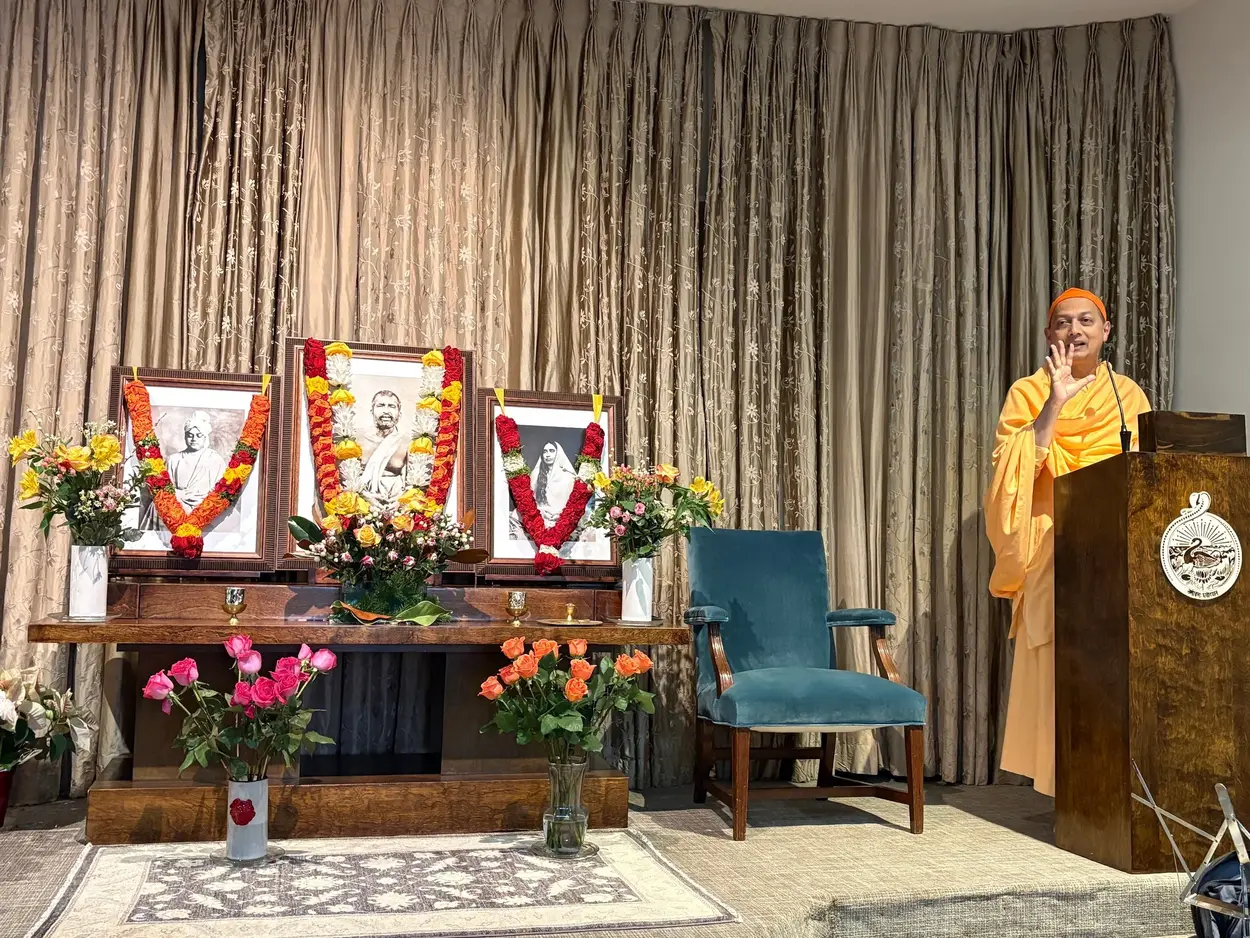
At the heart of this teaching is a bold claim: you are not merely a person moving through life—at your deepest level you are pure awareness itself, the reality in which all experience appears. When this is not understood, life becomes a struggle of attachment and fear. When it is understood, the same life can be lived with clarity, peace, and an inward freedom that does not depend on circumstances.
This essay unpacks that insight step by step, with special emphasis on a unique Vedantic method: analyzing your own daily experience—waking, dreaming, and deep sleep—to discover what remains constant behind them. That constant is what Vedanta calls the Self, Atman, or in the Mandukya’s language, Turiya.
1) Vedanta in One Sentence: The Identity of the Self and the Ultimate
Vedanta is the philosophy rooted in the Upanishads. It does not begin with blind belief; it begins with a careful look at experience and the search for what is ultimately true. While the tradition is vast, its central message can be summarized in a single sentence:
You are one with the ultimate reality.
The Upanishads express this through what are called the Mahāvākyas (“great sayings”), such as:
- Tat tvam asi — “That thou art.”
- Aham brahmāsmi — “I am Brahman.”
- Prajñānam brahma — “Consciousness is Brahman.”
- Ayam ātmā brahma — “This very Self is Brahman.” (associated with the Mandukya)
The point is not to inflate the ego into grandiosity (“I am God, therefore I can do anything”). The point is the opposite: to dissolve the mistaken identity that produces fear, craving, and sorrow. Vedanta says: the deepest ‘I’ is not the anxious personality; it is the awareness in which the personality appears.
If that sounds like an extraordinary promise, it is. And the tradition pairs the promise with a method—not merely to accept the idea, but to realize it.
2) A Necessary Warning: The Teaching Is Powerful and Easy to Misuse
Swami Sarvapriyananda offers a kind of “buyer beware,” because Vedanta is both direct and subtle. If misunderstood, it can produce confusion instead of liberation.
Immature misunderstandings often look like this:
- “If I’m Brahman, religion is fake.”
- “If I’m Brahman, I don’t need practice.”
- “If I’m Brahman, other paths are inferior.”
Mature understanding looks like this:
- Vedanta does not destroy religion; it explains it and gives it a foundation.
- Vedanta does not end practice; it clarifies why practice matters and what it can accomplish.
- Vedanta does not insult other paths; it recognizes that different methods fit different minds and stages.
In other words, Vedanta is not an excuse to become arrogant or careless. It is a call to become profoundly honest about what you are—and then to live from that depth.
3) The Mandukya’s Unique Method: Find the Self by Studying Yourself
Many spiritual traditions point toward ultimate reality through stories, metaphors, moral teaching, or devotion. The Mandukya Upanishad does something unusual: it offers a direct analysis of your own consciousness.
It says, in essence:
If you want to know reality, first know yourself.
If you want to know yourself, study the forms your experience takes every day.
Your life is not one continuous stream. It cycles through three primary modes:
- Waking
- Dreaming
- Deep sleep
These are not exotic mystical states. They are the most ordinary and universal features of human life. Yet the Mandukya uses them as a doorway to the extraordinary.
4) The Three Familiar Faces of “I”: Waker, Dreamer, Deep Sleeper
A) Waking: The “I” of the everyday world
In waking, you feel: I am this person in this body, living in this world.
You interact with objects, people, responsibilities, and events. This is the realm of practical life.
Vedanta calls the waking level “gross” not as an insult, but as a descriptive term: it is the level of physical, outward experience.
B) Dreaming: The “I” of an inner world
In dreaming, the waking world disappears. You may have a dream body, dream sensations, dream emotions, dream people. While dreaming, it rarely feels like a dream; it feels like reality.
Vedanta calls this level “subtle” because it is composed not of physical matter but of mental content—images, memories, impressions, and internal dramas.
C) Deep Sleep: The “I” of blankness
In deep sleep, both waking and dream worlds vanish. There is no story, no scene, no thought. And yet, when you wake up, you often say something like:
- “I slept deeply.”
- “I didn’t know anything.”
- “It was peaceful.”
Vedanta calls this “causal” because it is like a seed-state: from it, waking and dream experiences emerge again.
So far, none of this seems like high philosophy. It sounds like an ordinary description of daily life. Exactly. The brilliance is what comes next.
5) The Fourth: Turiya Is Not a “Fourth State” — It Is the Reality Behind All States
The Mandukya says: there is a “fourth” aspect called Turiya. But here is the crucial subtlety:
Turiya is not a fourth state alongside waking, dreaming, and deep sleep.
It is not a special trance you enter later. Not a far-off heaven. Not a rare mystical experience available only after years of practice.
Instead:
Turiya is the underlying reality of the other three.
A classic illustration is gold and ornaments:
- Necklace, ring, bangle—these are forms.
- Gold is not another ornament. Gold is the reality of the ornaments.
Likewise:
- Waking, dream, deep sleep are forms of experience.
- Turiya is the awareness that makes all experience possible.
If you misunderstand this, you will search for “Turiya” like a destination. The Mandukya insists: it is here now, because you are it.
6) The Janaka Story: “Was That True? Is This True?”
To bring the idea alive, Swami Sarvapriyananda retells an old story about King Janaka. In a dream, Janaka loses everything—his kingdom, honor, comfort—until he is reduced to hunger and despair. Then he wakes up in his palace, safe again.
But instead of dismissing it as “just a dream,” the philosopher-king asks:
“Was that true, or is this true?”
A wise sage responds by pointing out something startling:
- In the dream, the palace was absent.
- In waking, the dream misery is absent.
So which is “true”?
The sage then reveals the deeper point:
Whether the dream world was real or not, you were there experiencing it.
Whether the waking world is real or not, you are here experiencing it.
The one undeniable constant is the experiencer—the witnessing awareness.
Therefore the conclusion is not “nothing is true,” but:
You are the truth.
Not the changing scenes, not the passing identities, but the awareness that knows them.
7) The Seventh Mantra: A “Negative” Description That Points to the Most Positive Reality
The Mandukya’s famous seventh mantra describes Turiya largely by negation:
- Not waking consciousness.
- Not dream consciousness.
- Not deep sleep blankness.
- Not something in-between.
- Not an object of the senses.
- Not something you can grasp, walk to, infer, or use like a tool.
- Not something language can capture.
- Not something the mind can fully turn into a concept.
At first, this sounds discouraging—like reality is unreachable. But the purpose is the opposite: it is to prevent you from confusing the Self with any object, experience, or state.
Then it offers a profound positive pointer:
There is a continuous “I”—an unbroken sense of being the experiencer—present through all changes.
The mind changes. The body changes. Circumstances change. But the fact that experience is known—that awareness is present—does not come and go.
This is why Vedanta calls Turiya:
- Peace itself (not merely peaceful)
- Auspiciousness and fullness (not merely moments of happiness)
- Non-dual (not divided into “me here” and “reality there”)
8) Why Suffering Persists in the Three States
One might say: “Deep sleep has no suffering.” In a direct sense, it feels that way—there is relief because the mind’s narrative is absent.
But Vedanta points out something subtle: the seeds of suffering remain.
When you wake up, your problems return: fear, responsibilities, health concerns, emotional attachments.
So the three states do not solve suffering permanently. They merely rearrange it:
- Waking: suffering is active and obvious.
- Dreaming: suffering can become strange, symbolic, or intense.
- Deep sleep: suffering is unexpressed but not uprooted.
Therefore, lasting freedom must be found not by escaping into a state, but by discovering the reality that is beyond the states, untouched by their fluctuations.
9) Three Reasons the Witness Is Untouched
Vedanta offers multiple layers of explanation for why the real Self is not harmed by experience.
1) Unattached presence (Asanga)
Experience moves through you like weather through the sky.
People come and go. Events rise and fall. The body ages. Yet you—as awareness—remain.
2) The illuminator is not stained (Prakāśaka)
Consciousness is like light:
- Light reveals clean and dirty objects alike.
- Light itself is not made dirty or holy by what it illuminates.
In the same way:
- Awareness reveals pleasure and pain, virtue and flaw, hope and fear.
- Awareness itself is not wounded by what appears within it.
3) Reality is not affected by appearance (Satyam vs. Mithyā)
Vedanta uses examples:
- A rope mistaken for a snake does not become poisonous.
- Mirage-water cannot wet the desert sand.
Likewise:
- The shifting worlds of waking, dream, and deep sleep are appearances.
- The reality in which they appear remains unchanged.
This is not meant to deny practical life. It is meant to free you from being psychologically imprisoned by it.
10) The Practice: OM as a Map of Consciousness
The Mandukya gives a practical contemplative support: OM.
It associates the parts of OM with the three states:
- A — waking
- U — dreaming
- M — deep sleep
Then it points to something even more significant: the silence.
Not silence as mere absence of sound, but the background from which sound arises and into which sound returns.
That silence symbolizes Turiya—the underlying awareness present before, during, and after every experience.
A powerful practice suggested by this teaching is to chant OM (aloud or mentally) while contemplating:
- Waking appears and disappears.
- Dreaming appears and disappears.
- Deep sleep appears and disappears.
- Yet the awareness that knows these changes is continuous.
Over time, this contemplation does something subtle: it loosens the tight grip of identification. You begin to sense that you are not trapped inside experience; experience is appearing within you.
11) “If This Is True, What About Religion and Practice?”
Here is the mature Vedantic answer implied by Swami Sarvapriyananda’s teaching:
-
Religion and spiritual practices are not “foolish.”
They are meaningful at their level, and they often prepare the mind. -
Practices do not create the Self.
They remove obstacles—confusion, agitation, misunderstanding—so that the truth becomes evident. -
Devotion, meditation, service, prayer, ethics—these become clearer in purpose.
They are not abandoned out of pride; they are refined through understanding.
Vedanta is like turning on a light in a room you have lived in for years. The furniture does not change, but you stop bumping into it. Life remains, but confusion reduces.
12) The Deepest Shift: Redefining “I”
The central transformation is not learning new information. It is shifting what you mean by “I.”
Ordinarily, “I” refers to:
- the waking person,
- the body-mind identity,
- the storyline of my life.
The Mandukya invites a different reference:
Let “I” refer to the witnessing awareness—Turiya—present in all states.
This is not self-hypnosis. It is an honest recognition: every experience you have ever had required awareness. You may doubt objects, memories, interpretations—but you cannot doubt that experience was known.
When this becomes stable, life changes in a quiet but revolutionary way:
- Joy is enjoyed, without desperate clinging.
- Pain is faced, without inner collapse.
- Success and failure lose their power to define you.
- The mind remains active, but no longer tyrannical.
Conclusion: The Most Direct Adventure of a Human Life
Swami Sarvapriyananda’s message, echoing the Mandukya Upanishad, is both simple and profound:
You seek peace, but you are peace at the deepest level.
You seek freedom, but you are the free awareness behind experience.
You seek lasting happiness, but you are the fullness in which all moments arise.
The “essence of all Vedanta” is not a complicated system. It is a shift in identity—from the changing to the changeless, from the scene to the screen, from the wave to the ocean.
And the Mandukya’s genius is its practicality: it does not ask you to believe in distant metaphysical worlds. It asks you to study your own everyday experience and discover what has always been present.
Not somewhere else.
Not later.
Here. Now. You.
You will get Vedanta updates in your inbox.
Occasional reflections on Vedanta. Unsubscribe anytime.